
MARCYINCNY1's CalorieKing blog
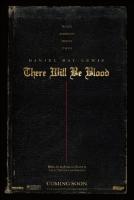
Friday, Mar 21 2008 - "There Will Be Blood"
View MARCYINCNY1's food & exercise for this day
I can't believe he actually got an Oscar for this schlock. It was dreadful; we laughed through most of the last two thirds of the movie. The only mystery was why we sat through the whole thing. Just plain awful.
I wish I'd read this by Stephanie Zacharek beforehand because it's spot on, especially the part about John Houston:
"...in playing Daniel Plainview, Day-Lewis doesn't so much give a performance as offer a character design, an all-American totem painstakingly whittled from a twisted piece of wood. The care Day-Lewis has taken in building this character borders on obsession: His locution, the precise but laconic way he unpacks his tattered leather suitcase full of sentences, is borrowed straight from John Huston; he even mimics perfectly the grayed, whiskery undertones of Huston's voice. At first the choice seems brilliant. What voice better represents gruff, manly American determination than Huston's? Then again, once we notice an actor's choice, that choice is no longer transparent. And past a certain point once we begin to notice, and even perhaps marvel at, the way an actor squints to signal mistrust or doubt, or screws up the side of his mouth just so his choices move to the fore and the character recedes.
And that's how easily we can lose a great actor like Daniel Day-Lewis to greatness.
When I think of Daniel Plainvew and Bill the Butcher, I see technique, a set of artful schematics. When I think of the scruffy blond scrubber, Johnny, in "My Beautiful Laundrette" (1985), or the wheelchair-bound artist and writer Christy Brown in "My Left Foot" (1989), or the unjustly imprisoned Gerry Conlan in "In the Name of the Father" (1993), or Danny Flynn, the fighter with an IRA past in "The Boxer" (1997), I see people who live on the screen with so much clarity and vitality that the last thing I'm thinking of are the actorish smoke and mirrors it may have taken to put them there. In those performances and in numerous others, like those in "The Age of Innocence" (1993), "The Unbearable Lightness of Being" (1988) and, most recently, "The Ballad of Jack and Rose" (2005), directed by Day-Lewis' wife, Rebecca Miller Day-Lewis cuts to the truth of his characters' lives by challenging us. There's no challenge in Daniel Plainview: no moment where we fear, against our better judgment, that we might have some confusing, conflicting emotions for him."
I wish I'd read this by Stephanie Zacharek beforehand because it's spot on, especially the part about John Houston:
"...in playing Daniel Plainview, Day-Lewis doesn't so much give a performance as offer a character design, an all-American totem painstakingly whittled from a twisted piece of wood. The care Day-Lewis has taken in building this character borders on obsession: His locution, the precise but laconic way he unpacks his tattered leather suitcase full of sentences, is borrowed straight from John Huston; he even mimics perfectly the grayed, whiskery undertones of Huston's voice. At first the choice seems brilliant. What voice better represents gruff, manly American determination than Huston's? Then again, once we notice an actor's choice, that choice is no longer transparent. And past a certain point once we begin to notice, and even perhaps marvel at, the way an actor squints to signal mistrust or doubt, or screws up the side of his mouth just so his choices move to the fore and the character recedes.
And that's how easily we can lose a great actor like Daniel Day-Lewis to greatness.
When I think of Daniel Plainvew and Bill the Butcher, I see technique, a set of artful schematics. When I think of the scruffy blond scrubber, Johnny, in "My Beautiful Laundrette" (1985), or the wheelchair-bound artist and writer Christy Brown in "My Left Foot" (1989), or the unjustly imprisoned Gerry Conlan in "In the Name of the Father" (1993), or Danny Flynn, the fighter with an IRA past in "The Boxer" (1997), I see people who live on the screen with so much clarity and vitality that the last thing I'm thinking of are the actorish smoke and mirrors it may have taken to put them there. In those performances and in numerous others, like those in "The Age of Innocence" (1993), "The Unbearable Lightness of Being" (1988) and, most recently, "The Ballad of Jack and Rose" (2005), directed by Day-Lewis' wife, Rebecca Miller Day-Lewis cuts to the truth of his characters' lives by challenging us. There's no challenge in Daniel Plainview: no moment where we fear, against our better judgment, that we might have some confusing, conflicting emotions for him."
0 comments so far.